What are NFT games and how do they work?
- A guild treasury vote lands on the forum: should the DAO buy 50 character NFTs before the next season, or spend the same budget onboarding new players with rental scholarships?
- The debate is not really about JPEGs.
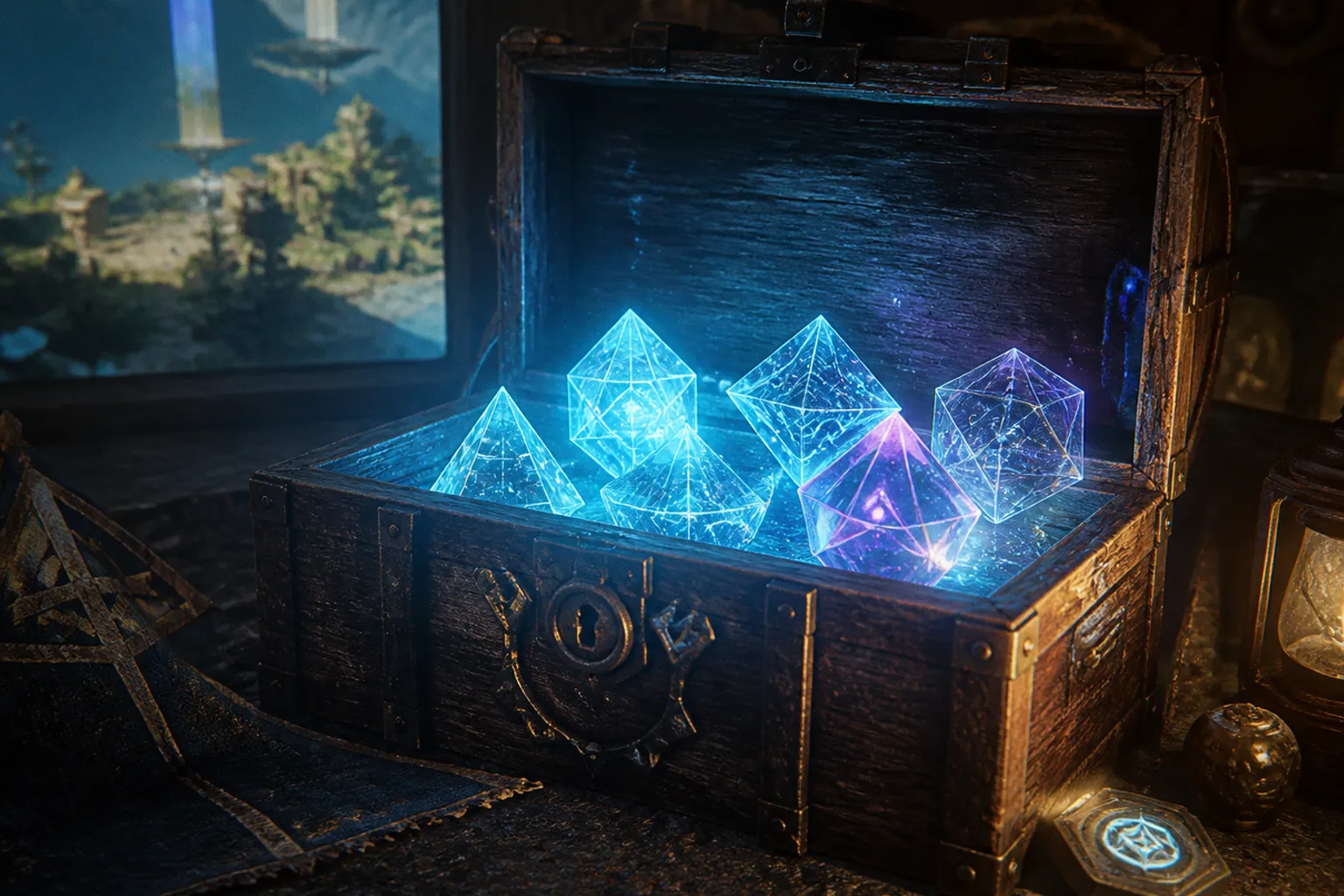
That is the practical heart of nft games. They use blockchain rails to turn certain in-game items — characters, land, skins, weapons, access passes, collectibles — into tokens players can hold in their own wallets. The pitch is simple: instead of every valuable item living inside a publisher’s private database, some assets become player-held property that can be traded through marketplaces and, in some cases, used as building blocks for wider community economies.
NFT games turn game items into player-held assets
The cleanest definition: NFT games are games that use non-fungible tokens to represent unique digital assets inside or around gameplay.
In a traditional game, your rare sword, stadium seat, avatar skin, or land plot exists because the studio’s server says it exists. You may have paid for it. You may have earned it over hundreds of hours. But usually you cannot freely move it, sell it peer-to-peer, or prove ownership outside that company’s system.
NFT games change the custody layer. A game item can be minted as a token on a blockchain, commonly using standards such as ERC-721 for one-of-one non-fungible assets or ERC-1155 for collections that mix fungible and non-fungible items. Your wallet holds the token. The game reads that wallet and grants access, utility, or status based on what it finds.
That distinction sounds technical. For players, it becomes social very quickly.
If you own a character NFT, you may be able to:
- use it in the game as a playable avatar or unit;
- sell it on an NFT marketplace without waiting for a studio-approved auction house;
- lend it to another player through a guild or rental system;
- qualify for events, mints, governance votes, or seasonal rewards;
- carry its on-chain history — mint origin, trades, upgrades — as part of its identity.
Not every NFT game uses all of these mechanics. Some barely use the NFT after minting. Some make the asset central to progression. The meaningful question is not “does this game have NFTs?” It is: what rights, access, and utility does the token actually coordinate?
Ownership is only powerful when the game design gives that ownership a job.
That is where many early play-to-earn nft games struggled. They treated ownership as enough by itself. But an economy cannot live on resale enthusiasm alone. Players need reasons to hold assets, use them, upgrade them, govern around them, and welcome new participants without turning every newcomer into exit liquidity.
How do NFT games work under the hood?
NFT games usually sit on three connected layers: the game client, the blockchain contract, and the marketplace or wallet infrastructure.
The game client is what you actually play. It may look like a card battler, RPG, farming sim, racing game, strategy title, or metaverse world. The blockchain does not need to run every animation, battle calculation, or map movement. In most cases, that would be slow and expensive. Instead, the chain records the asset ownership layer: who owns which item, when it was minted, and sometimes how it has been upgraded or transferred.
Smart contracts handle the rules for minting, transferring, and trading the NFTs. If a collection has 10,000 genesis characters, the contract defines how those tokens are created and how ownership changes hands. If a land sale has fixed plot coordinates, the contract can anchor those plots as scarce assets. If a game supports crafting, breeding, or fusing, some of that logic may also touch smart contracts, though many teams keep complex gameplay logic off-chain for performance.
Wallets are the player’s account layer. Instead of only logging in with an email and password, you connect a wallet that contains your blockchain gaming assets. The game checks the wallet and says, effectively: yes, this player owns Plot #412; yes, this player can equip the dragon cloak; yes, this player can enter the holders-only dungeon.
Marketplaces are the liquidity layer. They let players trade assets peer-to-peer through smart contracts rather than relying entirely on a centralized publisher store. That does not mean marketplaces are magical or risk-free. It means the asset can have a market beyond one company’s checkout page.
A simple flow looks like this:
1. A player mints or earns an NFT asset.
The asset is created on-chain and assigned to the player’s wallet. It might be a land parcel, avatar, pet, weapon, card, badge, or cosmetic.
2. The NFT’s metadata defines what it is.
Metadata can include the image, name, attributes, rarity traits, animation files, level, class, coordinates, or functional properties the game recognizes.
3. The game reads the wallet.
When the player connects, the game verifies ownership and unlocks the relevant in-game use.
4. The player can hold, trade, rent, or sometimes upgrade the asset.
Depending on the game’s design, the NFT may be static, evolve through play, or interact with other economic systems.
5. The community starts forming around asset rights.
Guilds, DAOs, creators, speculators, competitive players, and casual collectors all begin negotiating what those assets are “for.”
That last step is where governance people like me start paying close attention. A token standard can prove ownership. It cannot, by itself, create alignment. The community has to decide whether the economy is built for durable play or short-term extraction.
The value of an in-game NFT comes from utility, scarcity, and coordination
People often talk about NFT value as if rarity alone explains it. It rarely does.
Rarity traits matter. Metadata attributes — background, clothing, accessories, class, weapon type, land size, biome, coordinates — can make one asset scarcer than another. A one-of-one animated skin will likely command more attention than a common item from a large mint. A land plot near a busy spawn point may be more valuable than a remote coordinate with no traffic.
But scarcity without utility is just a smaller pile of inventory. What gives in-game nft ownership staying power is the relationship between the asset and the living economy around it.
Here is a more useful way to separate the value drivers:
| Value driver | What it means in NFT games | Why players care |
|---|---|---|
| Scarcity | The asset has limited supply or rare traits in its metadata | Scarcity can support collector demand and status |
| Utility | The asset unlocks gameplay, earning routes, access, crafting, events, or social roles | Utility gives holders a reason to use rather than only flip |
| Liquidity | The asset can be traded through marketplaces with enough buyer interest | Liquidity makes ownership feel less trapped |
| Provenance | The asset’s mint origin, transaction history, or early-season status is visible on-chain | Provenance can create cultural and collector value |
| Governance relevance | Holding the asset may affect voting, proposals, or treasury eligibility | Governance turns holders into stakeholders, not just customers |
| Social coordination | Guilds, creators, and communities build around the asset class | Coordination can make an asset useful beyond its raw stats |
This is why two assets with similar artwork can behave completely differently. One may sit in a dead collection with no players, no events, and no development cadence. Another may become a membership key into a guild, a productive land tile, or a character used in competitive play.
The asset is not the economy. The asset is a claim on participation inside an economy.
For players, this changes the emotional texture of digital ownership. Selling a rare mount is no longer just “cashing out.” It may mean leaving a guild strategy. Buying land is not only a speculative position. It may mean committing to build a social space that other players will actually visit. Holding a founder avatar may give you access to governance, but it also puts you inside the messy work of voter apathy, treasury management, and incentive design.
That is the part the glossy trailers skip. Ownership invites responsibility.
Virtual land is where game design meets neighborhood politics
Virtual land NFTs represent specific plots, coordinates, or zones inside a game world or metaverse. On paper, that sounds like digital real estate. In practice, the strongest land systems behave less like static property and more like community infrastructure.
A landowner might be able to build interactive experiences, host events, place advertising, rent space to creators, operate resource production, or create a branded social hub. The plot’s value depends not only on scarcity but on foot traffic, location, tools, and whether the world has enough active players to make “location” mean anything.
The 2021 surge in metaverse land sales made this painfully visible. Many buyers treated land as a passive asset. Buy the parcel, wait for the crowd, sell higher. But healthy virtual land economies usually need active stewardship: builders, event hosts, moderators, designers, guilds, and players with reasons to return.
A land system can create a grassroots economy when it answers a few hard questions:
- What can landowners actually do that non-owners cannot?
If ownership only gives a decorative plot, demand leans speculative. If land can host quests, shops, tournaments, crafting stations, or social events, it has operational value.
- Does land concentrate power too early?
Large presales can give whales control over the best coordinates before ordinary players even understand the world. That creates resentment and weak onboarding.
- Can builders participate without owning land?
A healthy world needs renters, collaborators, performers, quest designers, and small teams. If every creative role requires expensive land, the economy narrows.
- Is there a reason for visitors to move through the world?
Virtual land needs circulation. Events, rewards, social discovery, resource routes, and game loops can create that circulation. Empty plazas do not.
- Who governs shared spaces and public goods?
Roads, portals, event calendars, moderation rules, and community grants often matter more than individual parcels. This is where DAO governance can become useful, if it avoids becoming a sleepy voting theater.
A metaverse plot is not valuable because it has coordinates. It is valuable because people coordinate around it.
That may be the most honest way to read land NFTs. They are not guaranteed claims on future rent. They are invitations to build something that other players find worth visiting.
Play-to-earn is only one model, not the whole category
A lot of people first encountered nft games through play-to-earn. The model promised that players could earn tokens or assets through gameplay and then sell them. At its best, this opened doors for global player communities, guild scholarships, and new forms of contribution. At its worst, it turned games into unstable labor markets with better onboarding slides than gameplay loops.
Not all NFT games are play-to-earn. Some focus on asset ownership without financial rewards. Some use NFTs for cosmetics, access passes, collectibles, modding rights, or community membership. Some experiment with “play-and-own,” where players earn durable assets through participation but are not promised income.
The difference matters because incentives shape behavior.
If the game mostly rewards extraction, players optimize for farming and selling. If it rewards mastery, creativity, coordination, and identity, players may still trade assets — but the market follows the culture instead of replacing it.
Common NFT game models include:
1. Collectible-first games.
These emphasize ownership of characters, cards, pets, or cosmetics. The economic engine is often scarcity, collection completion, and marketplace trading.
2. Asset-backed competitive games.
Players use NFT units, cards, or equipment in battles. Balance becomes delicate here. If the strongest assets are also the most expensive, the game risks sliding into pay-to-win.
3. Virtual world and land economies.
Land, wearables, avatars, and creator tools shape the experience. The challenge is sustaining activity after the initial land sale.
4. Guild-driven play-to-earn systems.
Guilds acquire assets and lend or delegate them to players. This can lower the entry barrier, but it also creates governance questions about revenue splits, labor expectations, and treasury risk.
5. Membership and access games.
NFTs work as passes into events, modes, communities, or seasonal content. The token is less a sword and more a social key.
6. Crafting and resource economies.
NFTs interact with consumable tokens, recipes, upgrades, and production loops. These systems need careful sinks, or inflation eats the economy from inside.
The strongest projects tend to be clear about which model they are running. Confusion is expensive. If players think they are buying productive assets but the team is building a cosmetic collection, trust breaks. If the team promises a player-owned economy but keeps all meaningful levers centralized, governance becomes theater.
ERC-721, ERC-1155, and why standards matter
Technical standards are not the most romantic part of nft games, but they shape what players can do.
ERC-721 is the common Ethereum standard for non-fungible tokens. Each token is unique. This works well for one-of-one characters, land parcels, rare cosmetics, founder passes, and assets where individuality matters.
ERC-1155 is a multi-token standard. It can support both fungible and non-fungible items inside one contract. That makes it useful for games with many item types: 10,000 identical arrows, 500 rare shields, one legendary sword, and seasonal badges all under a more flexible structure.
For a player, the standard is mostly invisible until something breaks — or until something works beautifully. Marketplace support, wallet display, batch transfers, inventory management, and gas efficiency can all depend on how the asset was implemented.
Metadata is the other quiet power center. It contains the visual and functional traits of an NFT: class, rarity, accessories, land coordinates, level, image files, animation references, and sometimes game-relevant attributes. If metadata is poorly managed, players can end up holding tokens whose art changes unexpectedly, whose traits are unclear, or whose utility depends on a centralized server with no transparency.
This does not mean every detail must be on-chain. Fully on-chain games and assets are still a specific design choice, not a universal requirement. But players deserve to know which parts of the asset are durable and which parts depend on the developer’s ongoing support.
A practical distinction:
| Asset layer | What it controls | Player risk if unclear |
|---|---|---|
| Token ownership | Who holds the NFT in a wallet | The player may not understand custody or transfer rights |
| Metadata | Traits, visuals, coordinates, attributes | The asset’s identity may change or become unreadable |
| Game utility | What the asset does inside gameplay | The NFT may exist but lose practical use |
| Marketplace liquidity | Where and how it can be traded | Ownership may be technically real but economically trapped |
| Governance rights | Whether holders can vote or propose changes | Community power may be symbolic rather than operational |
This is why “100% ownership” needs careful language. Players can own the token. They do not automatically own the game’s intellectual property, copyright, servers, balance rules, or future development roadmap unless those rights are explicitly granted. Owning an NFT sword does not mean you own the studio’s fantasy universe. Owning land does not always mean you can do anything you want on it.
That nuance protects communities from disappointment. It also helps serious builders design better systems.
Interoperability is the dream — and still the hard part
Cross-game NFTs are often described as if you can take one avatar, one sword, or one jacket across every game world. Technically, interoperability means an asset can be recognized and used across multiple platforms or metaverses. Culturally, it is one of the most appealing promises in blockchain gaming.
But true cross-game utility is rare.
Games have different engines, art styles, balance systems, hitboxes, lore rules, economies, and moderation standards. A flaming sword that makes sense in one RPG may break a tactical shooter. A high-fashion wearable may not fit a voxel world. A dragon pet with combat stats in one game may only be a decorative badge in another.
So when a project says “interoperable,” players should ask what kind:
- Visual interoperability: the asset’s appearance can be imported or represented elsewhere.
- Identity interoperability: the asset acts as a badge, credential, or proof of membership across communities.
- Utility interoperability: the asset has functional use in more than one game.
- Economic interoperability: the asset can interact with markets, staking, crafting, or rewards across ecosystems.
- Governance interoperability: the asset carries voting power or reputation across related DAOs or subcommunities.
The first two are much easier than the third and fourth. A partner game can honor your avatar as a badge. It is far harder to make that avatar mechanically balanced in two unrelated combat systems.
This does not make interoperability fake. It makes it a governance and design problem, not just a wallet connection problem. Communities need shared standards, asset mapping, moderation agreements, and incentive alignment between studios. Without that, “cross-game” becomes a marketing word pasted over a single-game asset.
The better near-term version may be modest: assets that carry reputation, access, or cosmetic identity across a small network of aligned games. That is still meaningful. If your guild badge opens event access in three partner worlds, that is real coordination. It just is not the same as dragging every item across the entire metaverse.
Marketplaces make ownership liquid, but liquidity cuts both ways
NFT marketplaces are the primary infrastructure for trading in-game assets. Smart contracts allow peer-to-peer transactions without a centralized intermediary approving each sale. That is a major shift from locked game inventories.
For players, marketplace access can feel liberating. You can exit an asset position. You can upgrade by selling three smaller items and buying one better one. A guild can rebalance its treasury after a season. A creator can build around secondary-market demand.
But liquidity also changes community behavior.
When every item has a visible floor price, players start reading game updates like monetary policy. A balance patch is not just a balance patch; it may affect asset valuations. A new mint is not just new content; it may dilute existing holders. A reward change can become a governance crisis if players believe the treasury is favoring one class of assets over another.
This is where NFT games become more like small economies than isolated entertainment products. They need communication rhythms, credible rules, and governance structures that reduce panic.
A healthy marketplace culture usually includes:
- clear supply schedules, so players are not surprised by sudden dilution;
- transparent royalty or fee policies, so creators and treasuries know how revenue flows;
- asset sinks or upgrade paths, so inventory does not inflate endlessly;
- newcomer-friendly entry points, so the game does not depend only on expensive legacy assets;
- governance processes that let stakeholders contest major economic changes without turning every patch into civil war.
There is a human side here. Floor-price obsession can flatten the game into a spreadsheet. But pretending prices do not matter is also dishonest. Players have capital, time, and identity tied to these assets. Good teams acknowledge that without letting speculators become the only constituency.
The governance layer is where ownership becomes a community test
Once players own assets, they begin asking governance questions even if the project never says “DAO.”
Who decides the next mint size? Who gets treasury grants? Should landowners vote more than active players? Do rare-asset holders deserve extra weight? Should guilds have delegated votes? How do you prevent voter apathy when most players just want to play?
NFT games make these questions unavoidable because assets create stakeholders. A player who owns land wants development to increase traffic. A competitive player wants balance. A collector wants rarity protected. A guild manager wants predictable yield or utility. A new player wants affordable access. These groups are not enemies, but their incentives are not identical.
The governance challenge is alignment.
If only whales vote, grassroots players leave. If every minor gameplay tweak requires a token vote, the game slows down. If the studio keeps full control while advertising community ownership, trust erodes. If the DAO treasury spends only on holder perks, onboarding suffers.
The best governance systems I have seen treat ownership as one voice in the room, not the whole room. They combine asset-holder votes with player councils, creator grants, transparent treasury reporting, and clear boundaries around what the community can actually change.
A useful governance map might look like this:
| Decision type | Better handled by | Why |
|---|---|---|
| Core game balance | Studio/design team with community feedback | Fast iteration matters, and most voters are not combat designers |
| Treasury grants | DAO or elected council | Spending community funds needs accountability |
| Land event calendars | Landowner associations or local councils | The people operating spaces know the traffic patterns |
| New asset supply | Shared process between team and holders | Supply affects both gameplay and asset confidence |
| Moderation rules | Hybrid governance with strong safety standards | Pure majority rule can fail vulnerable players |
| Onboarding programs | Guilds, councils, and treasury committees | New player access is a public good |
This is not corporate governance in a costume. It is the social operating system of a game economy. And if it is ignored, the loudest holders usually fill the vacuum.
So, what should players actually look for?
If you are trying to understand how do nft games work in practice, do not stop at the mint page. Look at the loops.
A durable NFT game usually has a clear answer to four questions.
First: what does the asset do? A character should have gameplay relevance, social meaning, collector value, or access utility. Ideally more than one. If the answer is “you can sell it later,” that is not a game loop. That is a resale hope.
Second: who needs whom? Strong economies create interdependence. Landowners need builders. Builders need visitors. Guilds need players. Players need affordable access. Creators need audiences. If every participant is only waiting for someone else to buy their bag, the community is brittle.
Third: where does value flow? Fees, marketplace royalties, mint proceeds, treasury funds, rewards, crafting costs, and land rents all shape incentives. Follow those flows and you will understand the politics of the game faster than any trailer can explain them.
Fourth: what happens when growth slows? This is the real stress test. Can the game still be fun without a constant stream of new buyers? Are there sinks, seasons, tournaments, stories, social events, and creative tools? Or does the economy need perpetual onboarding to avoid collapse?
NFT games are not automatically better than traditional games. They are different because they move some ownership and coordination outside the publisher’s closed database. That can empower players, guilds, creators, and collectors. It can also amplify speculation, inequality, and governance fatigue if the design is lazy.
My position is simple: blockchain ownership matters when it makes players more than renters in the worlds they help animate. But ownership should deepen play, not replace it.
So the next time a game offers you a land plot, avatar, weapon, or founder pass, ask the community question behind the asset: are we buying isolated inventory, or are we building an economy where people actually want to stay?