Reduce GameFi gas fees using Arbitrum Orbit L3 chains
- High-frequency on-chain interactions dictate the unit economics of GameFi.
- On Ethereum Layer 1 (L1), standard smart contract interactions frequently cost between $2.00 and $15.00, rendering microtransactions mathematically impossible.
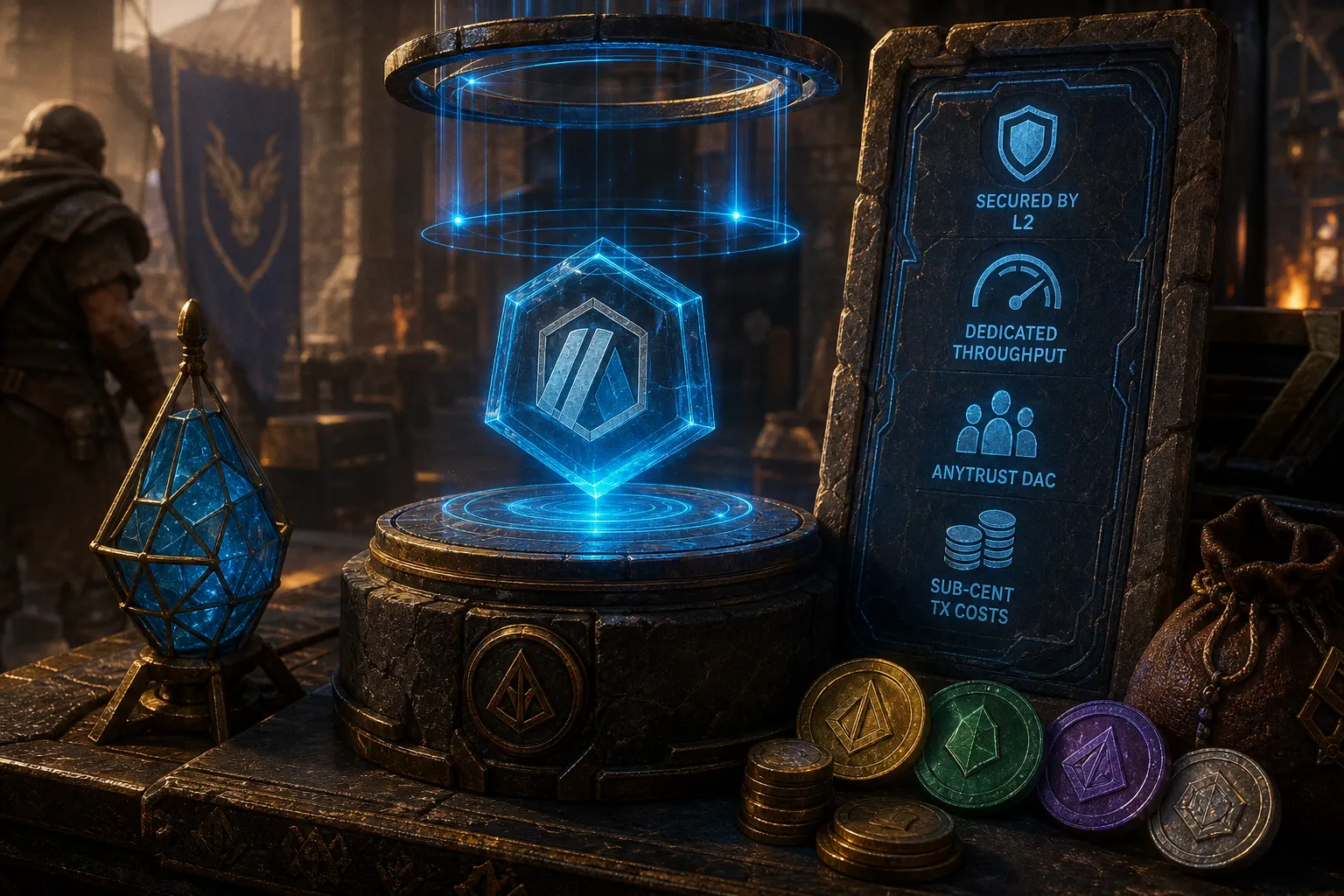
To maintain economic viability, Web3 game deployments require transaction costs below $0.01. Understanding how to check and reduce GameFi gas fees using Arbitrum Orbit L3 chains provides a direct path to achieving sub-cent transaction costs. By shifting transaction execution off the parent L2 network and customizing the data availability layer, developers can establish predictable, low-latency execution environments.
The Architecture of L3: Moving Beyond Standard L2 Constraints
Arbitrum Orbit allows developers to deploy dedicated Layer 3 (L3) networks on top of Arbitrum L2 chains (such as Arbitrum One or Arbitrum Nova). This structure changes the path of transaction execution and state settlement. In a standard L2 setup, all transactions compete for block space with high-volume decentralized finance (DeFi) protocols and non-fungible token (NFT) mints. This shared state model introduces cost volatility.
An L3 chain operates as a dedicated execution environment that settles its state to the underlying L2. The L2 then settles to the L1. This layered approach introduces several technical changes:
- State transition execution: The L3 processes transactions locally using the Arbitrum Nitro engine, converting execution inputs into WebAssembly (Wasm) state transitions.
- Compression: Transaction data is compressed before being posted to the parent L2, reducing the footprint on the underlying network.
- Settlement efficiency: The parent L2 processes the L3 state updates within its own execution cycle, shielding the L3 from direct L1 gas spikes.
Designing a blockchain network requires the same attention to structural integrity as physical architecture and material selection, where choosing the wrong base layer leads to systemic collapse under load. By separating the execution layer from the settlement layer, L3 chains isolate game logic from external market activity.
Leveraging Arbitrum Nova and AnyTrust for High-Frequency Gaming
Data availability (DA) represents the largest cost component for optimistic rollups. On standard rollups, posting transaction data directly to the parent chain as calldata accounts for over 90% of total transaction fees. To reduce GameFi gas fees using Arbitrum Orbit L3 architectures, developers must optimize how transaction data is stored.
Arbitrum Orbit chains can be configured to use Arbitrum AnyTrust technology instead of standard Rollup mode. AnyTrust replaces the requirement of posting all data on-chain with a Data Availability Committee (DAC).
| Metric / Parameter | Rollup Mode (Arbitrum One Base) | AnyTrust Mode (Arbitrum Nova Base) |
|---|---|---|
| Data Availability Location | On-chain (L2 Calldata) | Off-chain (Data Availability Committee) |
| Average Transaction Cost | $0.01 – $0.05 | Sub-cent ($0.0005 – $0.002) |
| Trust Assumption | 1-of-N honest validators | N-of-M honest committee members |
| Throughput Capacity | Moderate | High (optimized for microtransactions) |
| Primary Use Case | High-value assets, DeFi | Micro-mints, game state updates, L3 NFTs |
The DAC consists of a set of external nodes responsible for storing transaction data and providing data availability certificates (DACerts). In this model, the L3 sequencer sends the full transaction batch to the DAC. The committee members sign the batch, and if a threshold of signatures is met, the sequencer only posts the DACert to the parent L2 instead of the full transaction data.
If the committee fails to cooperate or goes offline, the chain reverts to standard rollup mode, posting data directly to the L2. This fallback mechanism ensures that safety is maintained, though transaction costs temporarily rise during the fallback period. For gaming projects utilizing an L3 NFT framework, this structure keeps minting costs low during normal operation.
Implementing Custom ERC-20 Gas Tokens to Subsidize Player Costs
Standard EVM networks require users to pay gas fees in the native asset of the chain (typically ETH). This requirement introduces friction, as players must acquire and hold the specific native token to interact with the game. Arbitrum Orbit resolves this by allowing developers to configure any ERC-20 token as the native gas token of the L3 chain.
"Custom gas token support changes the economic design of the game, allowing developers to align network fees directly with project-specific utility tokens."
Configuring a custom ERC-20 token as the gas asset enables three primary economic strategies:
1. Direct Token Sink: Game developers can use their native governance or utility token for gas. This creates a persistent transaction-based sink, removing tokens from circulation as players interact with the game.
2. Gas Subsidization Models: The game operator can run a paymaster contract using Account Abstraction (ERC-4337). The paymaster holds the native gas token and pays for user transactions behind the scenes. The player interacts with the game with zero gas friction, while the operator covers the sub-cent costs.
3. Stablecoin Integration: Developers can set a stablecoin (such as USDC or USDT) as the gas token. This removes volatility from transaction pricing, ensuring that a state update costs a fixed fiat equivalent regardless of market fluctuations.
To implement a custom gas token, the ERC-20 contract must meet specific criteria. It must be deployed on the parent L2 network before the L3 chain initialization. The token must also lack rebasing mechanics or transfer fees, as these features disrupt the gas accounting logic inside the Arbitrum Nitro virtual machine.
Isolating Throughput: Eliminating Network Congestion for In-Game Actions
On shared networks, gas prices fluctuate based on demand. A popular NFT mint or a liquidation cascade on a major DeFi protocol can cause gas prices to spike across the entire chain. For a game, this means players may suddenly find themselves unable to perform basic actions like equipping an item or completing a quest due to cost spikes.
Arbitrum Orbit addresses this by providing dedicated throughput. The L3 chain operates with its own sequencer, mempool, and state.
- Zero execution competition: The execution of game transactions does not compete with external applications. If a major dApp on Arbitrum One experiences a volume surge, the Orbit L3 settling to Arbitrum One remains unaffected in terms of local gas fees.
- Predictable block times: Sequencers can be configured to produce blocks at rapid, consistent intervals (e.g., 250ms), matching the latency requirements of interactive web applications.
- Custom gas pricing floors: Developers can define a minimum gas price floor (e.g., 0.1 gwei) for their L3 chain. This prevents the network from dropping below a baseline fee level, protecting validators from spam attacks while keeping transaction costs predictable.
This isolation is critical when evaluating how to check and reduce GameFi gas fees using Arbitrum Orbit L3 engines. By benchmarking the gas consumption of specific game actions (such as a character level-up or an item trade) on a dedicated L3 testnet, developers can establish a flat-rate gas cost structure that remains stable over time.
Strategic Trade-offs: Balancing Decentralization and Performance in Orbit Deployments
While Arbitrum Orbit L3 chains offer significant cost and throughput advantages, they introduce specific trade-offs that developers must evaluate before deployment.
The first trade-off relates to the security model. An L3 chain does not inherit the exact decentralization profile of Ethereum L1. Its security depends on the validator set of the L3 and the integrity of the underlying L2. If the L3 uses AnyTrust, security also relies on the honesty of the Data Availability Committee. A smaller committee increases the risk of data withholding attacks, where malicious committee members refuse to release transaction data, preventing users from withdrawing assets.
The second trade-off involves interoperability and bridging latency. Moving assets between the L3 and the parent L2 requires traversing the Arbitrum bridge. For optimistic rollups, the standard challenge period introduces a 7-day delay for withdrawals back to the parent chain unless fast-bridging providers (which charge liquidity fees) are utilized.
Finally, developers must manage the infrastructure overhead. Operating an L3 chain requires running sequencers, data availability nodes, indexers, and block explorers. While third-party Rollups-as-a-Service (RaaS) providers simplify this process, they introduce recurring operational costs that must be factored into the overall budget of the game. Developers must weigh these infrastructure fees against the gas savings realized by their player base.