We're investing $1 million in Africa's indie game developers.
Google Play has launched its first Indie Games Fund in Africa, committing $1 million to support 10 independent studios in Sub-Saharan Africa.
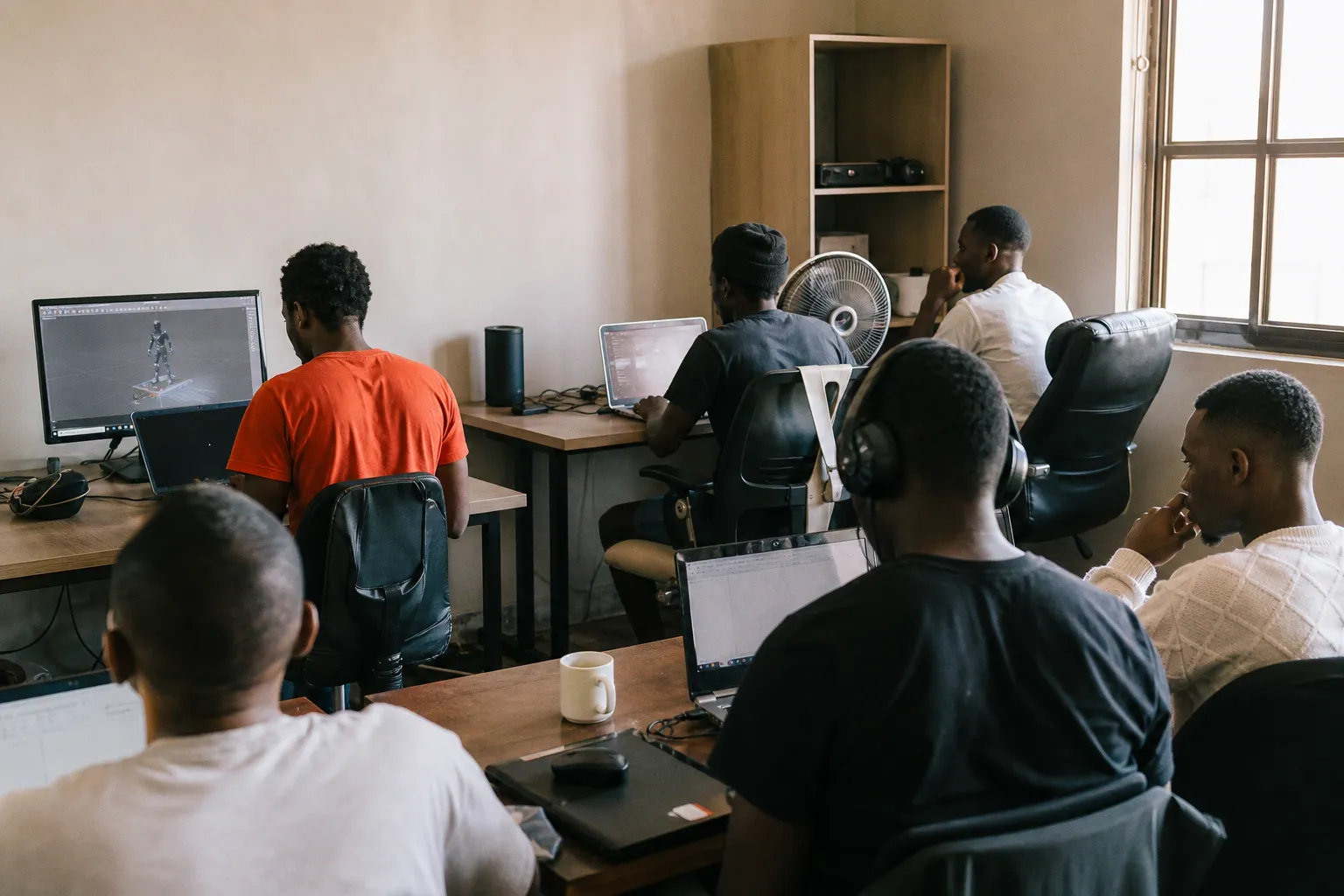
For Web3 and GameFi operators, the signal is practical rather than ideological. Capital is being routed toward studios that already shipped a mobile, PC, or console title — the same execution threshold that separates playable economies from whitepaper-native projects.
The fund is aimed at shipped studios, not concept decks
Google says the program targets indie developers in Sub-Saharan Africa that have already launched a mobile, PC, or console game. Ten local studios are expected to receive support, with grants ranging from $50,000 to $200,000.
Regional reporting adds that eligible applicants must be privately owned studios with no more than 50 employees, and that studios must be registered in one of 32 eligible African countries, including Nigeria, Kenya, Ghana, and South Africa.
That eligibility stack is important. It filters for teams with a live production loop: build, release, observe player behavior, then improve performance and market reach. In GameFi terms, that is the minimum viable discipline before layering in tradable assets, token sinks, battle passes, or player-owned inventory systems. A studio that cannot retain users in a conventional mobile or PC environment will not fix that problem by adding on-chain rails.
The support package is capital plus platform mechanics
The confirmed package includes equity-free funding, dedicated mentorship, and hands-on technical support. Realnews Magazine, citing Google Play’s EMEA managing director Ben Wilson, reports that the technical support is intended to improve game performance, visibility, and market reach.
There is also a distribution condition reported by Realnews: successful applicants would be required to publish their games on Google Play and participate, on a non-exclusive basis, in the Google Play Pass subscription program for two years.
For developers, that clause deserves close reading. Non-exclusive participation does not necessarily block other channels, but it does introduce platform economics into the roadmap. If a studio is also designing NFT items, off-platform marketplaces, or tokenized progression, the team should model how subscription access, app-store distribution, and any external asset layer interact. The core question is not “Web2 versus Web3”; it is whether the revenue architecture remains coherent across access fees, in-app spending, subscriptions, and any asset economy.
What builders should verify before applying
Applications are open now and, according to Google’s announcement, close at noon UTC on July 31, 2026. Regional reporting says the 10 selected studios are expected to be announced in September.
For eligible African studios, the immediate checklist is architectural: confirm corporate eligibility, employee count, shipped-game status, and country eligibility; then audit whether Google Play publication and Play Pass participation fit the current monetization model.
For GameFi-adjacent teams, the more technical diligence is around state and ownership boundaries. If gameplay progression, inventory, or premium content already depends on external wallets, token balances, or NFT metadata, the studio should map which systems remain inside the Google Play build and which sit outside it. Assuming a studio wants global reach, platform compliance and economy design need to be solved together, not patched after funding arrives.
The broader read: this fund does not validate blockchain gaming by itself. It validates a more grounded pipeline for African game studios — shipped products first, scale capital second, technical optimization alongside distribution. For virtual-world economies, that is the healthier order of operations.